
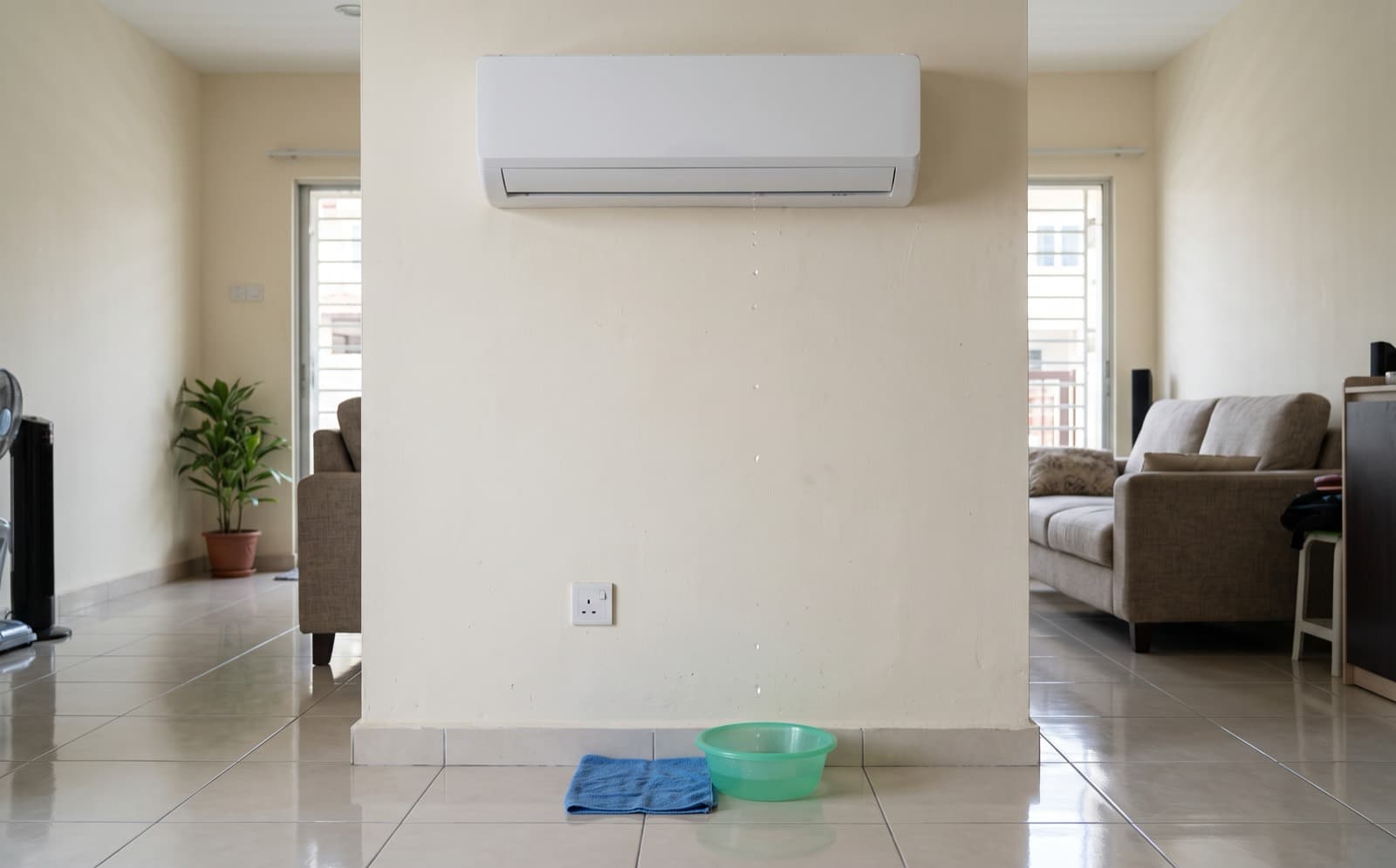
A wet patch on the wall under the aircond, or drops landing on the bed or the sofa. Water leaking from the indoor unit is one of the most common aircond problems in Malaysian homes, and the first thing people ask us is whether it is still safe to switch on.
This guide is for the wall-mounted split aircond most homes have. It answers the safety question first, then the checks you can do without tools, and where to stop and call a technician.
Is It Safe to Keep Using?
The water itself is not toxic. It is condensate: moisture the indoor unit pulls out of the room air as it cools, the same as the drops on a cold glass. It is not the refrigerant (the "gas"), which stays sealed inside the copper pipes. It is not clean water either, so wipe it up and do not drink it.
If it is only a few drops onto a bare floor, put a towel or a basin under the unit and carry on with the checks below. If it keeps leaking after the checks, leave it off until it is looked at.
Why an Aircond Drips Indoors
Every aircond makes water while it cools. Inside the indoor unit, the water collects in a tray and runs out through a drain hose, usually to the outside wall or a floor drain. A leak indoors almost always means the water cannot get out that way. The usual reasons: the hose is blocked, kinked or sitting in water; the filter is so dirty that the coil ices up and then melts; or the unit is not level, so the tray overflows on one side.
Safe Checks You Can Do Yourself
1. Switch off at the remote and the isolator
Turn the aircond off with the remote first. Then switch off the isolator: the switch for the aircond on the wall near the indoor or outdoor unit, or the aircond breaker in your DB box. Do this before you touch the unit.
2. Clean the filter
On most wall units the front cover lifts up on hinges and the mesh filters slide out, as your user manual shows. Rinse them under the tap, let them dry fully in the shade, and slide them back in. A clogged filter blocks the airflow over the cold coil, so the moisture can freeze into ice instead of draining away. When the ice melts, the tray overflows.
3. Look at the drain hose end outside
Find where the thin drain hose comes out, usually low on the outside wall, near the outdoor unit or at a floor drain. Look at it without pulling on it:
- Blocked: dirt, leaves, insects or a spider web at the end.
- Kinked or bent upwards: water cannot run uphill.
- Under water: the end sitting in a puddle, a bucket or a blocked floor drain lets water flow back.
If the end is only sitting in water or a pot has squashed it, move the pot or empty the bucket. Do not push wire or anything else up the hose.
4. Note when it leaks
- Only after long hours on a very cold setting, or you see ice or frost on the vents: it may be a frozen coil. Switch off and let it thaw.
- Drops spitting out of the vents with the cold air, not dripping from below: try about 26°C, a medium or high fan, and keep windows and doors closed.
- Only when it rains heavily: rainwater may be coming in through the pipe hole in the wall.
Write this down or take a photo. It helps the technician find the cause faster.
5. Is the unit tilted?
Stand back and look at the indoor unit against the ceiling line. If it looks tilted, especially after renovation or painting work near it, note it and take a photo. Do not lift or re-hang the unit yourself.
Leave These to a Technician
- Flushing a blocked drain line inside the wall or the unit.
- A frozen coil that comes back, even with clean filters, or a suspected low refrigerant ("gas"). Refrigerant work needs a qualified technician. For more on this, see aircond not cold: 7 checks.
- Re-levelling or re-installing a tilted unit, or reconnecting a drain hose that has come loose.
- Rainwater through the wall hole, which needs resealing.
- Ceiling cassette units: these pump the water out with a drain pump. If a cassette leaks, switch it off and call a technician.
When to Call Us
Anything past the checks above is safest with a technician visit.
If you bought the aircond from Tanradio and it is still under warranty, use our online warranty claim form. Add the model, a photo or short video of where the water comes out, and the checks you have done. You get a tracking number to follow the repair. For anything else, see our services or WhatsApp us below. Shopping for a new unit? Our aircond page covers sizes and installation.
Frequently Asked Questions
Is it safe to keep using an aircond that is leaking water?
If the water is dripping near a power point, an extension cord or anything electrical, switch the aircond off at the remote and at its isolator or breaker straight away, and dry the area. If it is only a few drops onto a bare floor, catch them with a towel or basin and do the safe checks. If it keeps leaking after that, leave it off and call a technician.
Is the water from my aircond dangerous?
The water itself is condensate: moisture the indoor unit pulls out of the room air, like the drops on a glass of ice water. It is not the refrigerant (the "gas"), which stays sealed inside copper pipes. The real risks are electricity and a slippery floor. It is not clean water though, so do not drink it.
Does a leaking aircond mean the gas is leaking?
Usually not. Most leaks are water that cannot get out, because of a blocked or kinked drain hose, a dirty filter, or a unit that is not level. Low refrigerant can make the indoor coil ice up, and the melting ice then drips. If you see ice or frost on the unit, that is a job for a technician.
Why does water spit out of the vents with the cold air?
Drops blown out of the vents, rather than dripping from the bottom of the unit, usually come from a very low set temperature, a low fan speed, or warm humid air coming in from an open window or door. Samsung suggests setting about 26°C, a medium or high fan, and closing windows and doors.
Is an aircond water leak covered by warranty?
It depends on the brand's warranty terms and on the cause. A part failing inside the unit is what a warranty is for. A dirty filter, or a hose end that has dropped into a puddle, is quicker to sort out yourself. If you bought it from Tanradio and it still leaks after the checks, file a warranty claim online.
Still leaking?
Talk to the Tanradio team
Send us a WhatsApp with your model and a photo of where the water comes out, or drop by your nearest branch.
Sources & references
- Samsung Malaysia support — unit not level, drain hose bent or under water, rainwater through the pipe hole, drops from the vents (26°C, fan speed): samsung.com/my/support
- Samsung support — switch off the power and breaker first, filter cleaning, low refrigerant causing ice that melts: samsung.com/ae/support
- LG support — a dusty filter blocks airflow over the coil, so moisture forms ice that later overflows the drain pan: lg.com/in/support
- LG support — hose end in water, kinks, a loose hose, leaks after installation or relocation: lg.com/levant_en/support
- Tanradio after-sales experience across our Johor branches. Always follow the user manual for your own model.